By Brian D’Ambrosio
For much of her career, Neyla Pekarek performed on some of the world’s biggest stages. As a member of The Lumineers, she played before tens of thousands of fans, appeared on Saturday Night Live, opened for U2, and performed at the White House during the Obama administration. Yet the Colorado-born singer-songwriter has increasingly found herself drawn not to celebrity, but to forgotten people whose stories have slipped through the cracks of history.
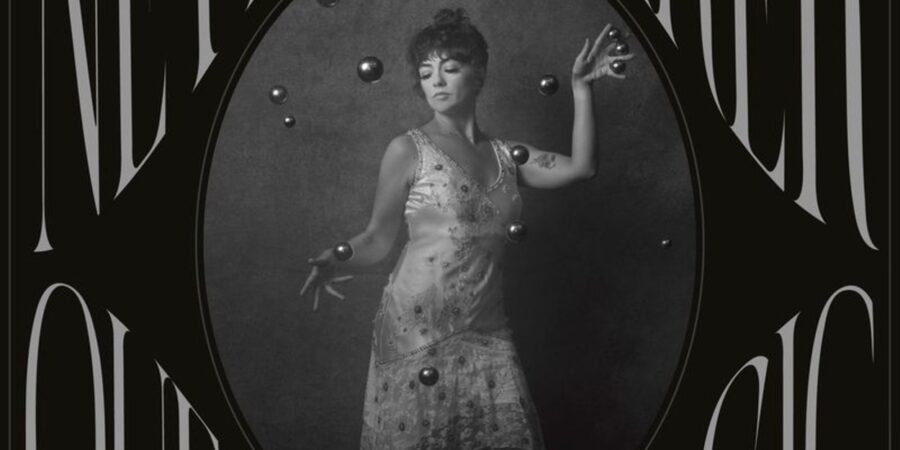
That fascination lies at the heart of The Queen of Magic, her newly released EP and developing stage musical inspired by Adelaide Herrmann, a pioneering magician and performer whose career unfolded during the same era as Harry Houdini. Once one of the best-known figures in stage magic, Herrmann has largely faded from public memory despite her important contributions to the art form.
Pekarek’s interest in such figures is rooted in a lifetime of curiosity. Raised in Colorado by parents who loved music and history, she grew up in modest circumstances. Her father spent 40 years as a mail carrier, while her mother was primarily a stay-at-home parent. Though neither pursued music professionally, both encouraged their daughter’s artistic interests.
“We didn’t grow up with a lot of money,” Pekarek said, “but any time we could be exposed to something culturally, whether it was concerts in the park or the symphony, my parents made that happen.”
Music filled the household. Her father, a devoted fan of Bob Dylan, The Beatles, and The Rolling Stones, shared a deep appreciation for artists who rose from humble beginnings. Pekarek studied cello, sang in choirs and barbershop quartets, and gravitated toward musical theater. Yet she describes herself as an intensely shy child.
“My high school choir teacher really helped me come out of my shell,” she said. “I felt like a really shy kid, and beyond the musical things I learned from him, he taught integrity and work ethic.”
Those qualities would prove invaluable after college. In 2010, shortly after earning a music education degree, Pekarek answered a Craigslist advertisement seeking a cello player for a fledgling folk band. The group consisted of two musicians newly arrived in Denver from New Jersey.
“I thought it would be kind of a fun adventure,” she recalled. “I was 22 years old and had not much to lose.”
That adventure became The Lumineers.
What began as DIY touring through coffee shops and living rooms soon exploded into international success. By 2012, the band had become one of the defining acts of the folk revival movement.
Pekarek still remembers performing on Saturday Night Live with host Jennifer Lawrence and feeling overwhelmed by the institution’s history. She recalls White House appearances with equal amazement.
“It felt sort of like I was outside of my body a little bit,” she said. “Like, this life is someone else’s.”
Despite the success, she spent years developing her own ideas while touring. Eventually, she left the band to pursue songwriting projects that reflected her personal interests and artistic voice.
One of those projects became Rattlesnake Kate, a musical inspired by the colorful Colorado folk figure Katherine McHale Slaughterback, who famously killed 140 rattlesnakes in 1925 and later fashioned a dress from their skins. The production premiered at the Denver Center for the Performing Arts and earned widespread acclaim.
Pekarek sees a common thread between Rattlesnake Kate and Adelaide Herrmann.
“She’s a fringe figure,” Pekarek said of Kate. “Her story was untold.”
The same could be said of Herrmann, whose life inspired The Queen of Magic.
According to Pekarek, Houdini himself reportedly remarked that anyone unfamiliar with Adelaide Herrmann knew little about the history of magic. Originally a dancer and performer, Herrmann partnered with her husband, Alexander Herrmann, one of the most celebrated magicians of the late nineteenth century. Together they helped transform magic from intimate parlor entertainment into large-scale theatrical spectacle.
“When you think of the prototype magician with the handlebar mustache, top hat, and tails, Alexander kind of invented that persona,” Pekarek explained. “But Adelaide had the idea to bring it to these grand stages with costumes and lights and music and storylines.”
After her husband’s death, Herrmann continued performing, becoming the first woman to headline her own magic shows and remaining active well into her seventies.
Reading Herrmann’s unfinished memoir, Pekarek was struck by the performer’s determination.
“She was just really ambitious and didn’t take no for an answer,” Pekarek said. “If someone was sick on a vaudeville show, she’d say, ‘Great, I’ll do the tumbling tonight. I’ve never done it before, but I’ll figure it out.’”
That resilience resonates with Pekarek, who admits she is often drawn to people living on the edges of conventional history. Her father was a history major, and she suspects some of that fascination may be hereditary.
“I find myself clinging to stories that are odd and interesting but still feel relevant through a modern lens,” she said.
Today, Pekarek is developing The Queen of Magic into a full-scale musical while presenting vaudeville-inspired performances featuring magicians, circus artists, and musicians. The project reflects not only Adelaide Herrmann’s world but Pekarek’s own evolution as an artist.
For someone who once considered herself painfully shy, she has become remarkably adept at stepping into the spotlight. Yet her real gift may be directing attention elsewhere—to remarkable women whose stories deserve another act.
In Adelaide Herrmann, as in Rattlesnake Kate before her, Pekarek has found more than a historical subject. She has found a reminder that ambition, creativity, and perseverance never truly disappear. Sometimes they simply wait for someone willing to bring them back into the light.
Brian D’Ambrosio is the author of Troubadour Truths: Truth, Songs, and the Long Way Home.
Brian D’Ambrosio Glide Magazine Archives: Brian D’Ambrosio – Glide Magazine
 Brian D'Ambrosio