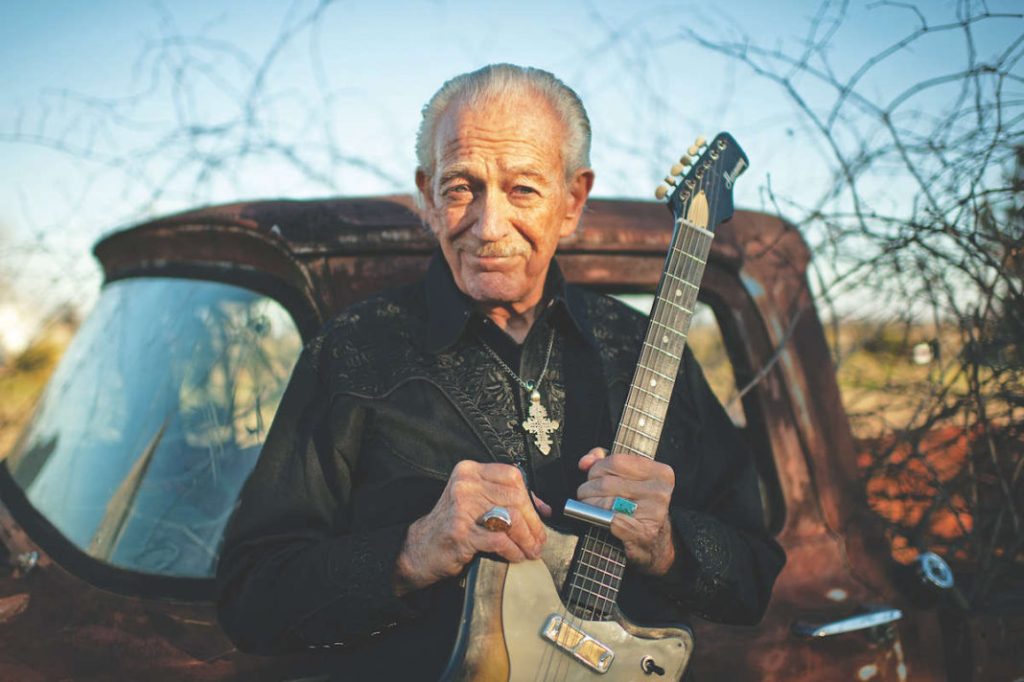
Charlie Musselwhite came up where the blues still walked upright and talked back. Courtesy Photo
By Brian D’Ambrosio
In Clarksdale, Mississippi, where the Delta air hangs thick and the ghosts don’t bother hiding, Charlie Musselwhite sits easy and watches it all come back around.
“I’m in Clarksdale, Mississippi. This is where I live,” he says. “Clarksdale just keeps getting better… we really love living in the Delta.”
That’s not nostalgia talking. Not quite. The Delta doesn’t deal in nostalgia—it deals in residue. What was played never quite leaves. It settles into the floorboards, into the bottle glass, into the long memory of the river itself.
Musselwhite came up where the blues still walked upright and talked back. Memphis, back when Beale Street wasn’t a souvenir stand but a living corridor—pawnshops, bars, bodies stacked in apartments behind the storefronts, music leaking from every crack.
“I would watch street singers in Memphis… try to figure out how they were doing things,” he says. “It got confusing because I didn’t know there were different tunings.”
He didn’t know—but he listened. And listening, in the Delta tradition, is a kind of apprenticeship you don’t sign up for so much as survive.
He found the old ones. Men like Will Shade and Furry Lewis—keepers of something older than commerce, older than the notion of career. “They were the real deal,” Musselwhite says. “They were real happy to meet me… eager to teach me what they knew.”
He didn’t yet know he was gathering a language.
Back then, Beale Street wasn’t curated. It was crowded, loud, alive with contradiction. Blues spilled out one door, gospel from another, and somewhere down the block a man might be working a guitar like it owed him money. Musselwhite drifted through it, picking things up the way a stray dog picks up scents.
Across the river in West Memphis, the doors were looser, the nights longer. “I could get in all those places as a teenager,” he says. Clubs like the Plantation Inn ran hot with blues, jazz, and R&B—Isaac Hayes at the piano one night, somebody else tearing it up the next. It was education without a classroom.
And then came Chicago—the proving ground.
If Memphis was a schoolyard, Chicago was the factory floor, loud and unforgiving. Musselwhite arrived chasing work, like so many before him, but found something else waiting in the smoke and neon.
At Silvio’s, he finally saw Howlin’ Wolf in the flesh.
“I walked in and the place was packed,” he recalls. “The band was just smoking… I was just slap-jawed. What a show he would put on.”
Wolf wasn’t just big—he was elemental. The records hinted at it, sure, but in the room, Musselwhite says, the power was something else entirely. The kind of force that rearranges your sense of what music is supposed to do.
They became friends. Wolf would call him over, tell stories, let him sit close enough to feel the vibration of it all.
And then there was Muddy Waters—the man who, without ceremony, changed Musselwhite’s life.
“I didn’t even tell anybody I played anything,” Musselwhite says. “I was just hanging out. But when Muddy found out I played harmonica, he insisted I sit in.”
That was it. No audition, no buildup. One push into the light, and suddenly the room shifted. Musicians who’d barely noticed him were offering gigs. The blues doesn’t send invitations—it opens a door and expects you to walk through.
And somewhere in that churn, Musselwhite met John Lee Hooker.
“The first time I heard John Lee live… we were immediate friends,” he says. “It was just like meeting an old friend for the first time.”
Hooker’s groove—hypnotic, stubborn, unyielding—fit Musselwhite’s sensibility. Not flashy, not polite. Just true. They stayed close until Hooker’s death, bound by something that didn’t need much explaining.
The blues, after all, is less about notes than about recognition.
Back in Clarksdale now, Musselwhite sees something stirring again. Not a revival—he’d laugh at that—but a continuation.
“It feels like it’s just simmering and about to take off,” he says. “It’s coming back to life.”
From his window, he can see the Delta Blues Museum, where kids are learning the form not as artifact, but as living practice. Players like Kingfish coming up through the program, carrying the sound forward without embalming it.
That matters to Musselwhite. Because the blues, if it’s real, doesn’t freeze. It mutates, stretches, keeps moving—like the people who made it.
“Everybody has their own little twist,” he says. “It’s still evolving.”
And then there’s the stranger thread—the way the blues slips sideways into the wider culture, sometimes without asking permission.
At a club in Canada, years ago, a young Dan Aykroyd was watching Musselwhite work the stage: black suit, slicked-back hair, dark shades, harmonica in hand.
“I didn’t know him at the time,” Musselwhite says. “But he told me later—that’s where he got the look.”
That look would become part of The Blues Brothers mythology—Elwood Blues, cool and deadpan, carrying a piece of Musselwhite into the mainstream. A borrowed silhouette, maybe, but one rooted in the real thing.
Musselwhite doesn’t make much of it. He’s more interested in the music than the mythology, though he speaks warmly of Aykroyd—“an outstanding human being… he’s done a lot for the blues.”
That’s the thing about Musselwhite. For all the history braided into his life, he doesn’t linger too long in it. He talks instead about “the will of the music.”
“It will just take you where it wants to go,” he says. “All you gotta do is show up.”
It sounds simple. It isn’t.
Because showing up—really showing up—means listening the way he did as a kid on Beale Street, not knowing what he didn’t know, only that something in the sound demanded attention.
These days, a good night still comes down to basics.
“A really enthusiastic crowd makes you feel good,” he says. “A big paycheck makes you feel good, too.”
He laughs. No mysticism there—at least not on the surface.
But listen closer, and you can hear it: the long echo of the Delta, the hum of Chicago nights, the scrape of Beale Street underfoot. A life carried not by ambition, but by current.
And in Clarksdale, where the river keeps its secrets but never its silence, Charlie Musselwhite is still listening.
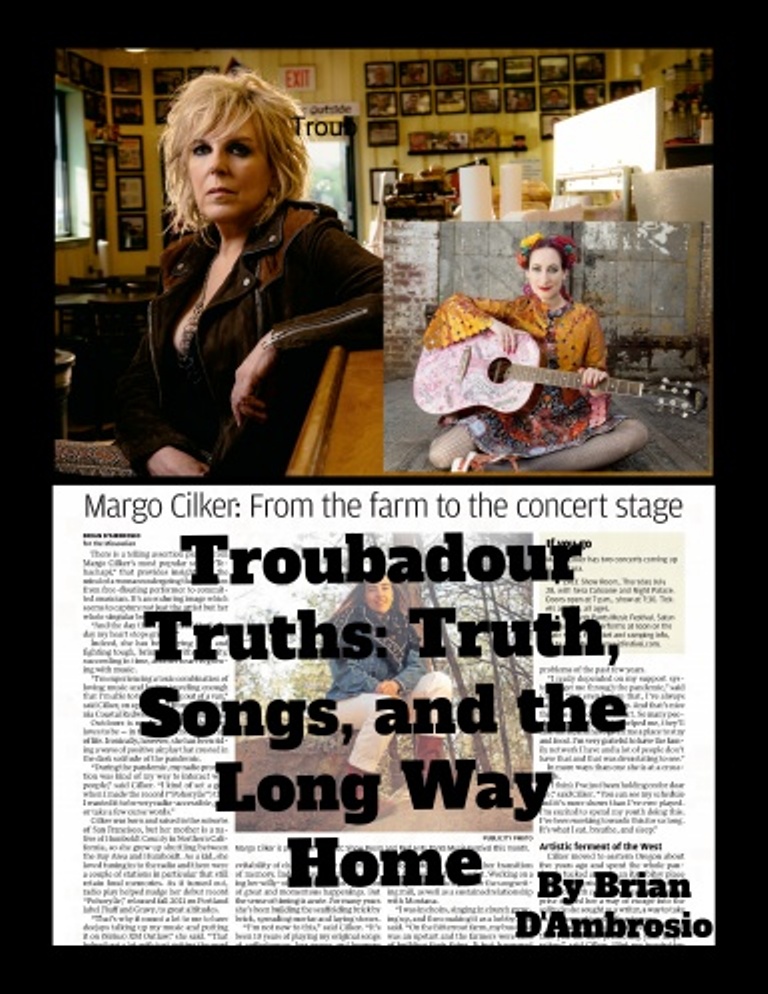
Brian D’Ambrosio is the author of Troubadour Truths: Truth, Songs, and the Long Way Home, a gathering of more than forty intimate portraits of musicians whose lives and songs illuminate the enduring spirit of the American troubadour.
 Brian D'Ambrosio