Interview with Glen Phillips
By Brian D’Ambrosio
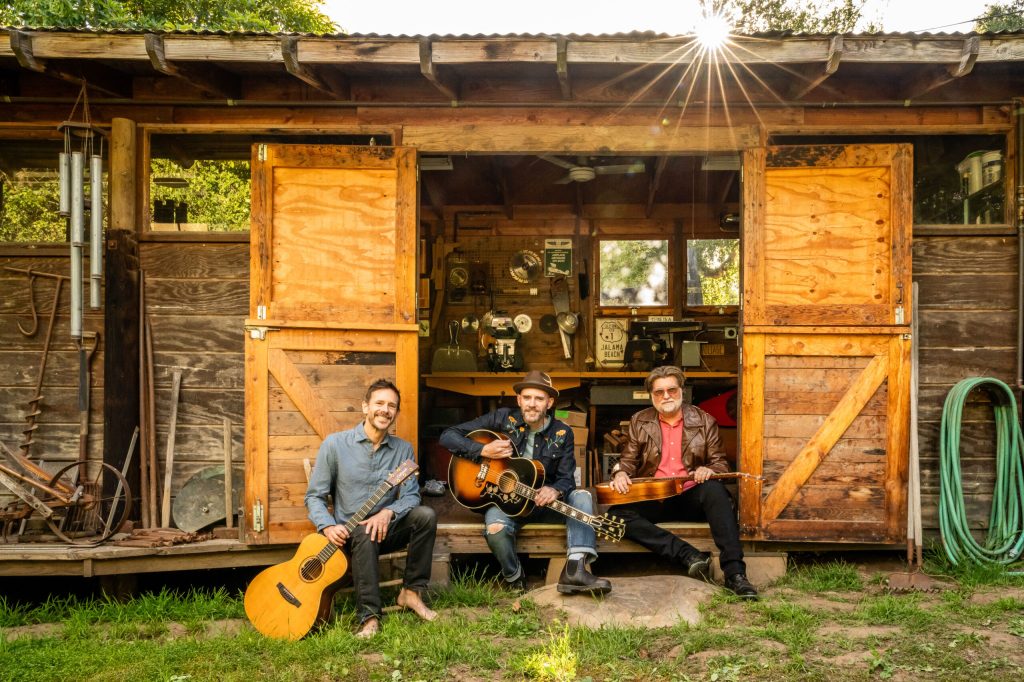
At 55, Glen Phillips sounds both reflective and lightly amused when he talks about the band he co-founded as a teenager in Santa Barbara, California. Four decades after forming, Toad the Wet Sprocket is still touring, still recording, and still—by Phillips’ own admission—slightly awkward.
“We were nerds before nerds ran the world,” he said. “We weren’t doing what every other band was doing.”
That difference, once a liability, became their longevity.
Phillips’ earliest musical memories begin with a radio and a cassette deck. “A lot of it was radio,” he recalled. “When you’re a kid, you just sit with the radio. And if you want to hear your favorite songs again, you wait till they come on and record it on the cassette player and hope you didn’t cut off too much.”
The act required patience and devotion. Making a mixtape, he said, “was this real-time act of devotion… like the best love letter there was.” Hours spent perfecting transitions gave music weight and meaning. It was meditation as much as entertainment.
In Santa Barbara, station KTYD became a formative influence. It was freeform and local. “Every DJ had a vibe,” Phillips said. “Every DJ was trying to turn you on to something they thought was awesome.” Before algorithms curated taste, human beings did.
The first albums Phillips bought with his own money might surprise fans: The Muppet Movie soundtrack and Saturday Night Fever. The former introduced him to the songwriting of Paul Williams; the latter to disco’s sweeping arrangements and the melodic precision of the Bee Gees. “I wanted to live at Studio 54,” he laughed. “It just looked like freedom.”
Later came prog rock and metal—Rush, Ozzy Osbourne, Iron Maiden. “Rush was the band that got me into lyrics,” he said. But his trajectory shifted again when he met guitarist Todd Nichols and drummer Randy Guss in high school theater and choir. They introduced him to R.E.M., Hüsker Dü, Elvis Costello, and U2. A new direction emerged—melodic, literate, emotionally direct.
Santa Barbara in the mid-1980s didn’t have a massive industry pipeline. It had garages, basements, and a bar called Pat’s Grass Shack. The owner, avoiding licensing fees, made it an originals-only venue. “We weren’t allowed to play covers,” Phillips said. The restriction forced the young band to write constantly. “Most of them were pretty terrible, but it taught us how to be writers.”
They played there every couple of weeks, generating a steady stream of songs. Their debut, Bread & Circus, was recorded live in a garage studio for $600. They hadn’t intended to make a full album—just two songs. But momentum took over.
At the time, they were college students assuming the band would end within months. Phillips had been accepted to San Francisco State and was planning to become a high school teacher. Instead, an unlikely chain of events—demos passed along without their knowledge—led to eight major labels courting them.
They chose Columbia Records for one reason: creative control. The label agreed to release their first two albums untouched. “We wanted to take less up front and have a higher back end,” Phillips said. “We wanted creative control.”
It was an unusual choice for young musicians suddenly offered large advances. But it set a tone: independence first.
“We were not your normal band,” Phillips said. Early shows were filled with uncertainty. “You finish and you’re like, were we good tonight? I think we might have been good.” Even as their audience grew, they maintained a kind of earnest vulnerability. In a decade when alternative rock leaned toward edge and irony, Toad the Wet Sprocket stayed melodic and song-focused.
The band’s name—lifted from a Monty Python sketch—was originally intended as a joke. It stuck for forty years.
Their philosophy extended beyond songwriting. They encouraged fans to tape shows and trade recordings. They hung out after concerts, sometimes for hours, speaking with anyone who waited. “We just stayed approachable,” Phillips said. “I think people felt like we were one of them.” That connection built slowly and steadily.
Internally, longevity required adjustment. Touring with Barenaked Ladies offered a lesson in positivity and communication. “We’d been the opposite of that,” Phillips admitted. “So we said, if we’re going to be in this for life, let’s make it great.” Forgiveness replaced nitpicking. The atmosphere shifted, and audiences felt it. “The happier we get on stage, the more joy people can feel,” he said. “And the more they want to be there.”
To mark four decades, the band released Rings (The Acoustic Sessions), revisiting songs from across their catalog. The project strips arrangements back, revealing new emotional contours. “We’ve got something from every record,” Phillips said. His favorites include “Jam,” “Scenes From a Vinyl Recliner,” and the reimagined “Rings,” originally a rocker on COIL. “We turned it into a ballad,” he said. “It seems like the song likes that much more.”
They even transformed the single “Good Intentions” into a bluegrass-tinged reinterpretation, rediscovering joy in a song that had once felt routine. At this stage, Phillips calls Toad a “legacy act,” but not in a resigned way. “We have an audience,” he said. “We want to do the best work we can. We want to creatively challenge ourselves and improve as a live band and as writers.”
Releasing music still makes him nervous. He prefers the creative process—the arguments, the compromises, the shared effort. “Did we throw in as much as we could?” he asked. That question matters more than chart positions.
For years, Phillips chased the next milestone. Now, he has allowed himself a different realization. “This is actually a good career,” he said. “I have the right audience. I’m in the right place.” He is no longer creating to get somewhere else. The goal is simply to make the best art possible—with Toad, solo, wherever inspiration leads.
Forty years after a Monty Python punchline became a band name, the awkward kids from Santa Barbara are still here—still melodic, still thoughtful, still themselves. And perhaps that is the quiet lesson of Toad the Wet Sprocket: liking your own weirdness may be the most sustainable strategy of all.
 Brian D'Ambrosio