Teetor had a gift for resolving practical problems with unique inventions.

By Brian D’Ambrosio
Ralph Teetor’s (1890–1982) life is a study in paradox. Born in a small Indiana town in 1890, he lost his sight before his 7th birthday, yet went on to shape how the modern world experiences the open road. His inventions ranged from precise piston rings to a wartime turbine technology, but his greatest legacy was the speed-regulating device we now call cruise control.
Teetor’s early years in Hagerstown, Indiana, began typically enough until an accident with a knife injured his eye. Doctors removed the damaged eye, but within a year, an extremely rare condition caused the loss of his remaining vision as well. By the age of 7, he was completely blind.
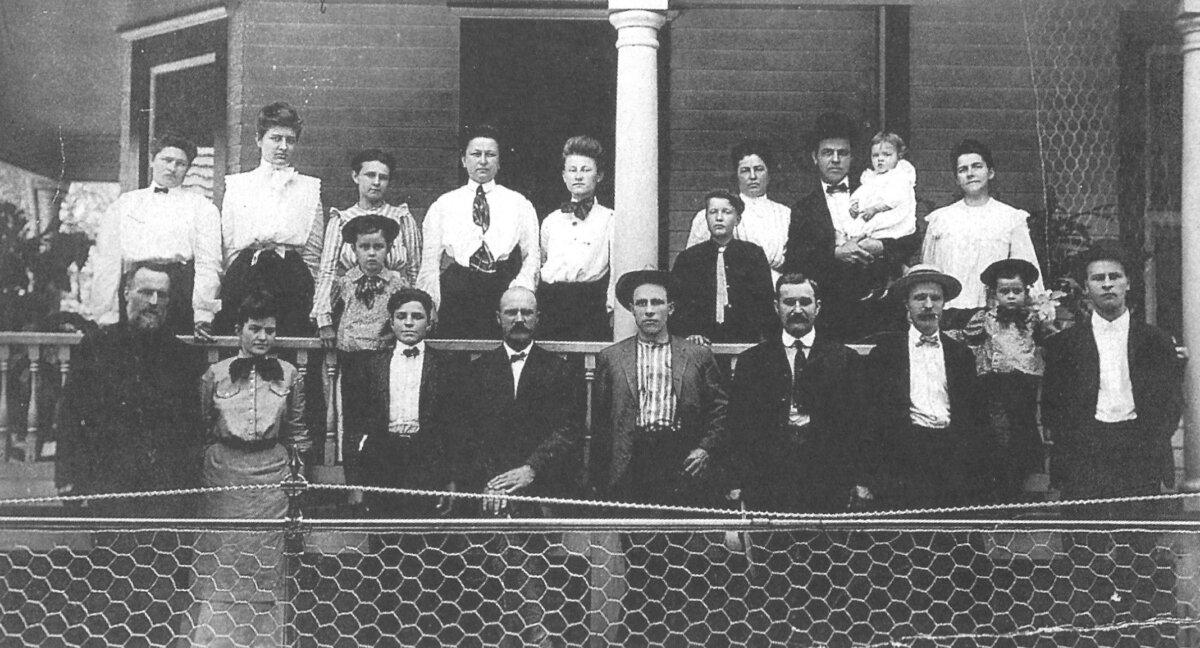
Rather than yielding to despair, Teetor’s family encouraged him to live as if nothing had changed. His parents filled his days with stories of innovators who had triumphed over difficulty. His household was steeped in mechanical curiosity. His father and uncle had founded the Railway Cycle Manufacturing Company, a shop where machines and invention were part of the daily rhythm.
Teetor learned to identify tools by touch, mastered lathes and grinders by feel, and quickly developed an instinctive grasp of mechanical processes. His disability never dampened his curiosity. By 10, he was a fixture in the workshop; by 12, he and his uncle Dan had built an automobile powered by a discarded gasoline engine. Newspapers praised the remarkable feat, never mentioning his blindness.
Education and Early Work
In 1912, Teetor earned a degree in mechanical engineering from the University of Pennsylvania. His graduation symbolized not only academic achievement but the triumph of determination over limitation. Soon after, he returned to Hagerstown to contribute to the family company.
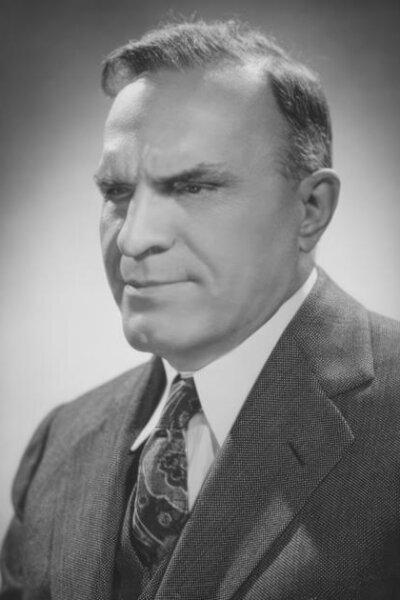
The business evolved rapidly. Initially focused on railway inspection cars, it shifted to supplying engines for McFarlan luxury vehicles. By 1913, the firm was renamed the Teetor-Hartley Motor Company.
Throughout the 1920s, his inventive streak continued. He patented a hydraulic gear shift in 1924, known today as an automatic gear shift. He then focused on developing stronger, longer-lasting piston rings. These were branded “Perfect Circle,” a name that became synonymous with quality and precision in the automobile industry.
Not all of Teetor’s efforts found success. He patented a fishing pole handle in the 1930s that never captured the market. But in engineering circles, his reputation grew steadily. By the mid-1930s, he had become president of the Society of Automotive Engineers, presiding over an industry experiencing rapid change and growth.
When his uncle Charles and father John passed away in the late 1930s, Teetor assumed greater responsibility for the family enterprise. His leadership deepened as he guided Perfect Circle through the challenges of the Great Depression and wartime America.

During World War II, Teetor’s innovations supported both civilian and military needs. Perfect Circle supplied piston rings for the surging automobile market and wartime machinery. He also developed techniques for balancing turbine rotors in naval destroyers.
After the war, he often spoke to blind veterans, emphasizing that loss of sight didn’t equate to loss of ability. His own life was living proof of that principle. He had cultivated independence and creativity not through vision, but through persistence and intellectual focus.
The Road to Cruise Control
The origin of Teetor’s most famous invention grew out of the war years. With fuel and rubber rationed, the federal government imposed a 35-mile-per-hour speed limit. Teetor recognized that maintaining such a pace was difficult, and that drivers constantly accelerated and slowed, wasting gasoline and endangering themselves by shifting attention back and forth from the speedometer.
In his basement workshop, he began developing a device that could keep a car at a steady pace. In 1945, he filed the first patent for what he initially called the “Speedostat,” which was granted on Aug. 22, 1950. It took years of refining before the device was ready for manufacturers, but by the late 1950s, major automakers were experimenting with it.
Chrysler was the first to adopt the system, marketing it as “Auto-Pilot” in 1958 models. Soon Cadillac and other companies followed suit, popularizing it under the name “Cruise Control.” Within a decade, Teetor’s invention was standard across much of the American automotive landscape.
By the mid-20th century, Perfect Circle was a major supplier to the automobile industry, and Teetor was widely respected as both an inventor and executive. In 1963, the company became a wholly owned subsidiary of Dana Corporation. At 73, Teetor retired, closing a remarkable career that had blended invention, leadership, and resilience.
Enduring Legacy
Teetor died in 1982 at the age of 91. His story is often told as an example of perseverance over adversity, but it’s equally a story about the role of imagination in shaping modern life. His inventions supported industries, created jobs, and influenced generations of drivers who may never know his name but benefit from his foresight each time they set a car on cruise.
One hundred years after his family launched the Railway Cycle Manufacturing Company, their final factory in Hagerstown closed its doors. Yet the legacy of Ralph Teetor remained far from finished. His life is remembered not as one of limitation, but of extraordinary vision without sight—a reminder that creativity comes not from the eyes, but from the mind’s capacity to see possibilities.
Brian D’Ambrosio “American Essence” archives: https://www.theepochtimes.com/author/brian-dambrosio
 Brian D'Ambrosio